


Professors
Fuxian Lake Solar Observatory
About
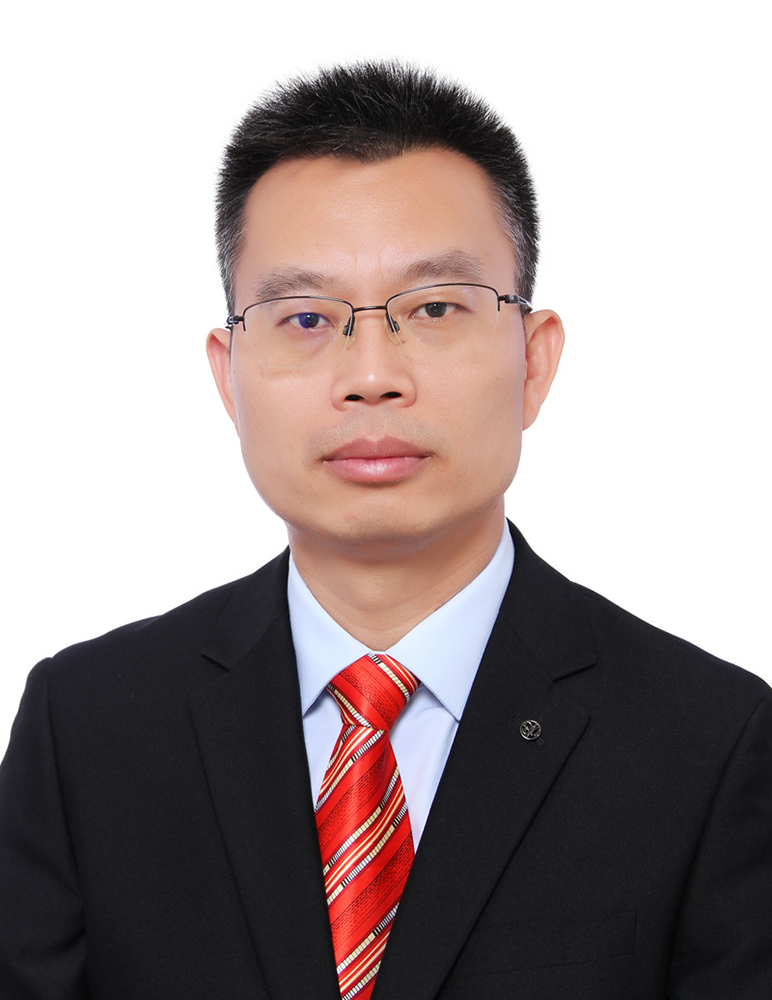
YAN Xiaoli, Researcher and Ph.D. Supervisor, serves as Director of the Fuxian Lake Solar Observation and Research Base at Yunnan Observatories, Chinese Academy of Sciences. He was among the first batch of Outstanding Members of the CAS Youth Innovation Promotion Association in 2015, selected as a Young Top Talent of the "Ten Thousand Talent Program" of Yunnan Province in 2018, listed as a Young and Middle-aged Academic and Technical Leader of Yunnan Province in 2022, and granted funding from the National Science Fund for Distinguished Young Scholars in 2023. His main research focuses on solar physics. He has published more than 80 SCI papers in prestigious international journals including Nature Communications, Nature Astronomy and The Astrophysical Journal (ApJ), with over 1,000 independent SCI citations; his research findings were selected into the "Top 10 Astronomical Science and Technology Advances" of 2016, the CAS Outstanding Achievements Exhibition of the 12th Five-Year Plan period, and highlighted as a featured plasma science article by Nature Communications. He was awarded the 2020 "China Highly Cited Article Award" by the Institute of Physics (IOP) Publishing of the United Kingdom, and received the First Prize of Natural Science of Yunnan Province as the first completer in 2021. Using self-developed observation facilities in China and combining space-based and ground-based observation data at home and abroad, he was the first to observe fast magnetic reconnection generated by twisted magnetic islands in the lower solar atmosphere through direct imaging, providing key constraints for the theory of magnetic island instability-driven magnetic reconnection; he discovered the new phenomenon that magnetic reconnection releases the magnetic twist of filaments and transfers mass, revealing the detailed physical processes of magnetic energy transport and release in the solar atmosphere; he proposed the formation mechanism of active region filaments driven by rotating sunspots, and took the lead in systematically conducting research on the causal relationship between rotating sunspots and solar eruptive activities in China.
Research Areas
solar physics